For most products, a software update is a minor inconvenience. For someone managing type 1 diabetes, it can feel very different.
An interrupted or failed update could temporarily block insulin delivery, leave the device unusable, or force users to manually re-enter critical dosage settings. That process was highly error-prone and emotionally stressful, especially in moments where users were already managing a significant cognitive load. In at least one reported case, incorrect settings entered during device replacement led to a hospitalization due to bricking the device from an update.
I was responsible for redesigning the OTA update experience to make it feel safer, more reliable, and more respectful of the realities of living with diabetes.
The challenge was not simply improving usability. The experience needed to reduce anxiety without compromising safety, work reliably in imperfect environments, and fit naturally into moments where users were already managing a significant cognitive and emotional load.
I began by stepping back from the update flow itself and examining the broader ecosystem surrounding it.
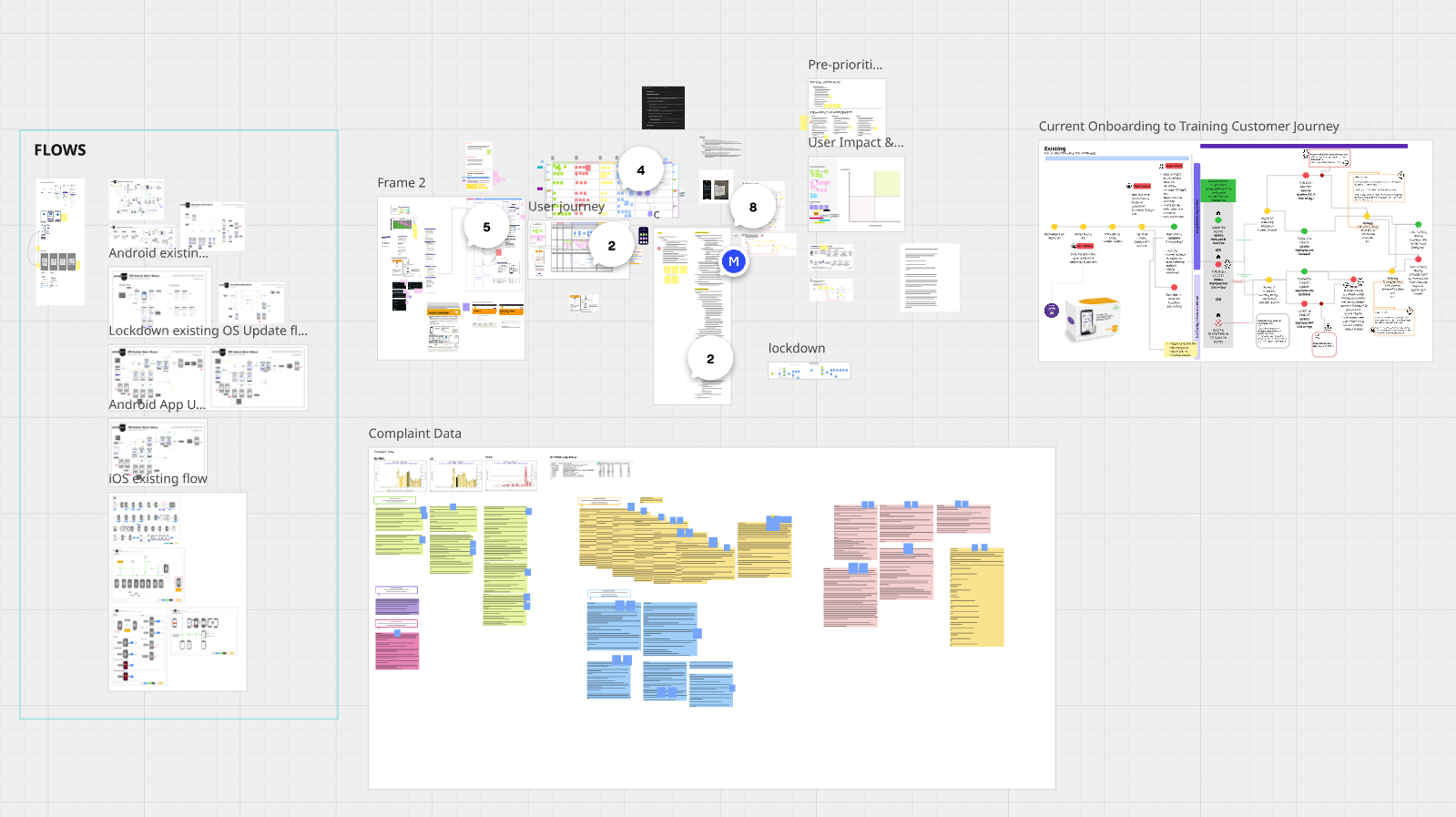
I mapped the full lifecycle across onboarding, software updates, device replacement, training, and recovery scenarios to identify where anxiety, risk, and operational breakdowns were occurring.
What quickly became clear was that the problem was not simply the update interface. The deeper issue was unpredictability. Users did not trust when updates would happen, how long they would take, or whether the device would remain usable if something failed. In a healthcare setting, uncertainty alone can create significant emotional stress.
To address this, I reframed OTA as a system-level experience rather than a single blocking interaction. I redesigned the architecture of the update flow into multiple phases:
Background Downloads
The most immediate change was separating the download from the installation. In the redesigned experience, the app checks for updates automatically and downloads them quietly in the background without blocking the user or requiring stable WiFi to be present at that exact moment. When the user is ready, the installation itself takes under 5 minutes and does not require a network connection since the update is already downloaded. This change will eliminate the most common failure scenario which a slow or failed download mid-process blocking a patient from their device.
Schedulable Installs with a Forced Countdown
Rather than presenting a binary choice of "update now or not now," the redesigned experience lets users schedule their installation for a time that works for them. A countdown timer creates a sense of urgency without panic. If a user keeps deferring, the system eventually moves to a non-deferrable update — it schedules it by their when the user is least likely to be in a high-risk situation like driving or managing an unstable glucose event.
In-App Notifications Instead of Email-Only Communication
The previous system relied on email to communicate upcoming updates — reaching only 57 to 65 percent of users. The redesigned experience adds in-app notifications that reach 100 percent of active users, giving them advance notice of what is changing, why, and what to expect. This directly addresses the fear patients expressed about updates appearing without context.
Hearing actual experiences by users helps me empathize with them and create personas to keep them in mind while strategizing.
The redesigned experience transformed OTA updates from a disruptive and anxiety-inducing event into a more predictable and trustworthy system.
Users gained greater control over when updates occurred, reducing fear around being interrupted during critical moments. By moving downloads into the background and restructuring onboarding flows, the experience became significantly less disruptive and more resilient in real-world conditions.
The introduction of therapy setting restoration reduced one of the highest-risk moments in the device lifecycle by minimizing manual entry during replacement scenarios. Operationally, the work also reduced support and trainer intervention tied to failed updates, onboarding interruptions, and therapy setup recovery.
More importantly, the redesign helped rebuild confidence in the update process itself. Users became more willing to stay on current software because the experience no longer felt unpredictable or unsafe. In a healthcare product where outdated software can directly impact therapy quality and long-term outcomes, increasing update adoption was not simply a business or technical improvement, it was a patient safety improvement.
Ultimately, this project reinforced an important principle for me:
In healthcare, trust is not created through messaging alone. It is created through systems that remain reliable during the moments when people feel most vulnerable.
